|
 News
News
|
Chile | Projects
Pelleting: a coat of native bacteria to transform dryland into fertile soil INIA, Curimapu, and the University of Concepción are working on a pelleting prototype that will allow beneficial bacteria adapted to Chilean soil conditions to be incorporated into seeds. 9/2/2026
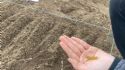
 Project trials with pelletizing. Project trials with pelletizing.
A seed can carry much more than the promise of a new plant. It can carry microorganisms capable of helping it face the harsh conditions of dryland farming. INIA, along with Curimapu and the University of Concepción, is working in this direction, developing and optimizing a pelleting prototype for the Kauke alfalfa seed. This technology coats the seed and allows for the incorporation of rhizobia and growth-promoting bacteria, as well as other components that favor its establishment. The challenge is particularly important for Kauke, the first alfalfa variety developed by INIA for dryland conditions. The new variety aims to expand forage production possibilities in areas where water availability is limited and offers outstanding agronomic attributes: 30% more forage production and 40% greater persistence than currently available commercial varieties. INIA Quilamapu researcher Dr. Lui Inostroza, an expert in genetic improvement, explains that for a plant to survive in these conditions, the first step is to ensure it establishes itself well. “In dryland farming, alfalfa is sown in autumn and must develop a sufficiently vigorous root system during the autumn and winter months to withstand four to six months without irrigation. Therefore, strengthening the early stages of growth is one of the project's main challenges.” A Coat for the Seed Simply put, pelleting a seed means coating it with a protective layer. This process can incorporate various components that will accompany the seed from the moment it reaches the soil, including beneficial microorganisms, micronutrients, and protective agents. In the case of Kauke, the project aims to develop a pellet that incorporates nitrogen-fixing rhizobia and plant growth-promoting rhizobia (PGPR), as well as micronutrients such as molybdenum and zinc. The goal is for these components to remain viable during storage and perform their function once the seed is sown. “Rhizobia are bacteria that establish a beneficial relationship with alfalfa roots. Through this association, the plant can utilize atmospheric nitrogen through biological nitrogen fixation, a fundamental process for its nutrition,” explains the specialist. Plant growth-promoting bacteria, meanwhile, aim to accelerate the early stages of plant development. Previous work by INIA has shown that certain PGPR, along with micronutrients, can promote alfalfa growth from sowing until the first leaves emerge. One of the distinguishing features of this innovation is that it is not simply a matter of adding any microorganism to the seed. For more than a decade, INIA and the University of Concepción have collected and characterized rhizobia associated with alfalfa fields in different regions of Chile, from Arica to Patagonia. The collection comprises approximately 60 strains obtained from environments with varying soil and climate conditions. Among them is a rhizobium collected in the Camarones Valley in Arica, which has demonstrated high adaptation to dry soils and effectiveness in nitrogen fixation. The project also considers growth-promoting bacteria from INIA's Microbial Genetic Resources Bank. The idea, adds researcher Luis Inostroza, is to leverage this accumulated knowledge to select microorganisms that not only function under ideal laboratory conditions but are also adapted to the environments where they will help alfalfa grow. Finding the Right Formula Developing the pellet is not simply a matter of coating the seed. The project seeks to determine the combination that protects the seed while simultaneously keeping the microorganisms alive and active. To do this, a drum machine with centrifugal rotation is used, allowing for testing different quantities and concentrations of adhesives, rhizobia, micronutrients, and calcium carbonate, as well as adjusting variables such as particle size and the equipment's revolutions per minute. The project also evaluates how long the microorganisms can remain viable during storage. One of the objectives is for the pellet to maintain microbial viability for more than 12 months, a crucial condition for ensuring that the seed retains its characteristics from the time it leaves the plant until it reaches the farmer. Additionally, the germination of the pelleted seed and the establishment vigor of Kauke are being evaluated under conditions that simulate autumn sowing temperatures. The project already has encouraging preliminary results. Initial evaluations show that pelleting does not affect germination and allows for a 35-40% increase in seed weight, meeting industry standards. Furthermore, environmentally friendly and microorganism-friendly organic and synthetic adhesives were developed. The team is also evaluating industrial quality parameters, such as pellet adhesion, hardness, and dust release. A technology designed for dryland farming Currently, a significant portion of the alfalfa seed sold in Chile arrives pelleted from other countries. However, transport and storage can affect the viability of the rhizobia present in the seed. Faced with this situation, the proposal seeks to generate a national and scalable alternative for pelleting Kauke seed by incorporating bio-inputs developed and selected in Chile. “More than just developing a new way to coat seeds, the project aims to add technology and value to a variety created to address one of the great challenges of agriculture: producing forage where water is scarce,” says Inostroza. The ultimate goal, the specialist explains, “is for Kauke to reach producers with a seed prepared to face its first months of life, accompanied by microorganisms that help the plant establish itself and better utilize the available conditions.” The project will develop a Kauke alfalfa seed with added biotechnological value, reducing dependence on foreign inputs and strengthening food sovereignty. It is expected to directly benefit more than 200 farmers, especially in the Itata Valley, where Kauke could achieve up to five times the forage production of a natural pasture (10 tons/ha versus 2 tons/ha), improving the potential of livestock farming. The initiative, “Development and technical validation of a pelleting prototype for ‘Kauke’ alfalfa seeds with native microorganisms adapted to dryland conditions,” is funded by Corfo, through Innova Región Ñuble, and has INIA as a technical-scientific partner and the University of Concepción as a collaborator. The project has a duration of 24 months. Curimapu Semillas, a company originating from the Ñuble Region and a South American leader in seed multiplication and selection, has been awarded the rights to multiply and market the Kauke alfalfa variety in Chile and worldwide. The team is comprised of specialists from INIA (National Institute of Agricultural Research) and professionals from Curimapu and the University of Concepción, with expertise in plant biotechnology, seed treatment, alfalfa breeding, microbiology, rhizobia, nitrogen fixation, and plant growth-promoting bacteria. The team members are Daniela Arriagada, Francisco Costa, Luis Inostroza, Jean Castro, Macarena Gerding, Matías Guerra, and José Méndez. INIA The National Institute of Agricultural Research (INIA) is Chile's leading institution for agricultural research, development, innovation, and technology transfer. Linked to the Ministry of Agriculture, it has a nationwide presence and a highly qualified team. It implements initiatives that contribute to the sustainable transformation of national agriculture, creating innovative solutions and value-added products that respond to the agri-food challenges of the country and the world.
Sign up to our newsletter
|
|||||||||
© Copyright Infoagro Systems, S.L.